
Case Study
Industry: Travel & Tourism · Duration: 20 months · Scope: SEO strategy, content alignment, internal linking, navigation, international content SEO
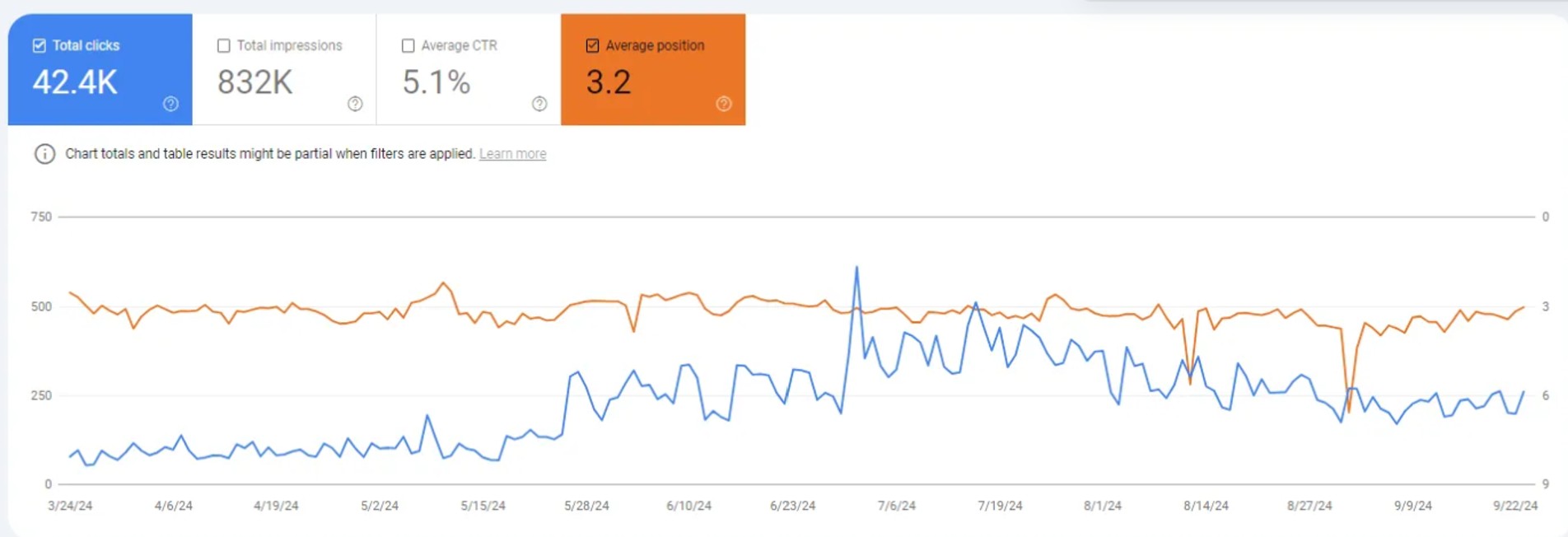
A key landing page on a non-English, non-French website was underperforming for the high-priority searches that actually mattered — the ones that don't already include the brand name. Traffic looked healthy on the surface because branded search was strong, but non-brand visibility told a different story: multiple pages were competing for the same terms, diluting relevance and making it hard for Google to know which page deserved to rank.
The goal was to increase non-brand visibility, consolidate ranking signals, and lift conversions — while working in a language I don't speak.
Over twenty months of active work, focused on clarifying signals, deepening content, and strengthening the authority of the page that should actually own the topic.
1. Understanding what was really happening — Identified every URL competing for the same non-brand queries, and mapped ranking distribution, impressions, and content gaps using Search Console and Screaming Frog.
2. Clarifying ownership — Selected one page to own the high-priority keyword cluster, and rebuilt its metadata, headings, and structure to send a clear, consistent relevance signal.
3. Deepening what was already there — Expanded thin sections, improved topic coverage, and reduced unnecessary keyword repetition across secondary pages competing for the same space.
4. Strengthening the connections — Strengthened contextual links from high-authority pages and updated navigation to reinforce the site's actual hierarchy.
5. Learning from what already works — Analysed how local competitors structured similar content and positioned their offering, and applied what worked while keeping the client's own tone and UX consistent.
Within twenty months:
This is the clearest real example of “every market has its own blocker” from the International SEO & GEO page. Here, it wasn't a technical problem or a content-quality problem — it was an ownership problem: too many pages quietly competing against each other for the same ground. Fixing that mattered more than writing more content.